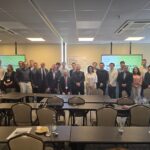
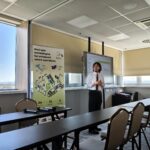
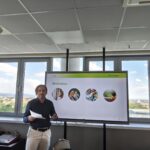
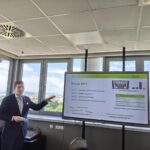
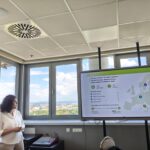
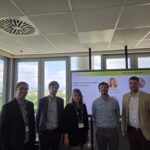
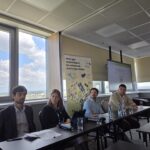
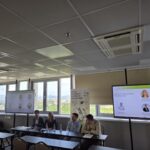
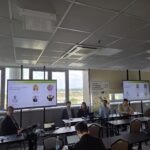
On May 21st, during TRA 2026, NEXUS partners, metro operators, industry representatives, researchers, and members of the project’s External Advisory Board gathered for a workshop dedicated to reviewing project progress and discussing the future of innovation in metro systems.
The event provided an opportunity to showcase the significant achievements made during the first 20 months of the project. Partners presented the advanced simulation models, digital twins, optimisation tools, and AI applications developed within NEXUS to support more efficient, resilient, and sustainable metro operations.
A key highlight of the workshop was the demonstration of NEXUS validation activities, including simulation models assessing the impacts of fully automated metro operations (GoA4) in the project’s Genoa and Sofia use cases. Results showed promising benefits in terms of passenger comfort, reliability, waiting times, capacity utilisation, and energy efficiency.
Partners also presented the Mobius platform, an open-source simulation and optimisation tool designed to help operators evaluate and improve metro service performance. Additional sessions explored AI-based applications for demand forecasting, operational optimisation, and vehicle condition monitoring, demonstrating how data-driven approaches can support smarter decision-making.
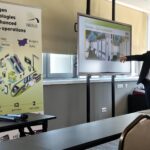
Another major focus was the presentation of the NEXUS Future Metro Vehicle Concept, developed to address evolving passenger needs and operational requirements. The proposed designs emphasise flexibility, accessibility, passenger comfort, and efficient use of space, while supporting future automated operations.
The workshop also examined the wider impacts of metro automation through techno-economic and sustainability assessments. Discussions highlighted the potential of automation to improve service reliability, operational efficiency, safety, and environmental performance, while also identifying challenges related to implementation, integration, and stakeholder acceptance.
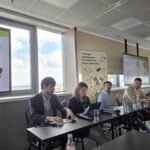
The event concluded with a panel discussion featuring representatives from metro operators and industry leaders, who shared their perspectives on innovation priorities for the coming decade. Topics included artificial intelligence, digitalisation, predictive maintenance, accessibility, sustainability, and the importance of ensuring that research results can be successfully translated into real-world applications. The panel featured:
- Todor Todorov; Sofia Metro
- Fabrizio Cerreto, Ph.D. Metroselskabet
- Arianna Amati; Hitachi Rail
- Alessandro Calegari ATM Milano
And it was Moderated by André Freitas (TIS).
As NEXUS enters its final months, the workshop confirmed the strong interest of the metro community in the project’s results and their potential contribution to the future of smarter, safer, and more sustainable urban mobility.